
Teaching History in Early Years to ensure a strong foundation
In Early Years, understanding the world through History is an important part of our curriculum. ‘Understanding the World’ encompasses a range of early historical skills and knowledge. Children are encouraged to talk about past and present events in their own lives and in the lives of family members. Practitioners share historical stories, objects and pictures to prompt discussion using past, present and future tense. Children are encouraged to develop a sense of change over time and are given opportunities to differentiate between past and present by observing routines throughout the day, growing plants, observing the passing of seasons and time and looking at photographs of their life and of others. Practitioners encourage investigative behaviour and raise questions such as, ‘What do you think?’, ‘Tell me more about?’, ‘What will happen if..?’, ‘What else could we try?’, ‘What could it be used for?’ and ‘How might it work?’ Use of language relating to time is used in daily routines and conversations with children for example, ‘yesterday’, ‘old’, ‘past’, ‘now’ and ‘then’. Alongside planned learning, children are encouraged to follow their own interests.
In our Pre School and Reception class, children begin to develop their sense of chronology by talking about their own life story and the life story of family members. They are supported to use the past tense when talking about things that have happened. Our children explore images of the past and make comparisons with the present.
How we teach History at Moreton Morrell
Children are taught about history through a range of sources and where possible they are given first-hand exposure to real artefacts. There are planned visits to important sites or museums to enable pupils to make connections. Lessons normally cover significant events and famous people from the past, and children are encouraged to make comparisons between times in history.
At Moreton Morrell, our history curriculum is rigorously sequenced so that our children’s historical knowledge, understanding and skills build over time. We have selected and designed our units carefully so that our curriculum reflects our community and the history within it whilst ensuring that diverse narratives and voices are also heard through the history lens.
Within our classrooms, we follow rich and ambitious lines of enquiry by answering big questions such as: I wonder why is ancient Greece known as a cradle of civilisation? We teach children the knowledge they need in small steps to answer these challenging questions successfully. Studying history in this way inspires children’s curiosity, encourages them to ask critical questions and enables them to have a better understanding of the society in which they live and that of the wider world. In our history curriculum, we have thought about key themes that run through the units of learning. By carefully mapping these themes across the units and revisiting them in different sequences of learning, we ensure children make links and gain historical perspective by placing their growing knowledge into different contexts, understanding the connections between local, national and international history; and between short- and long-term timescales.
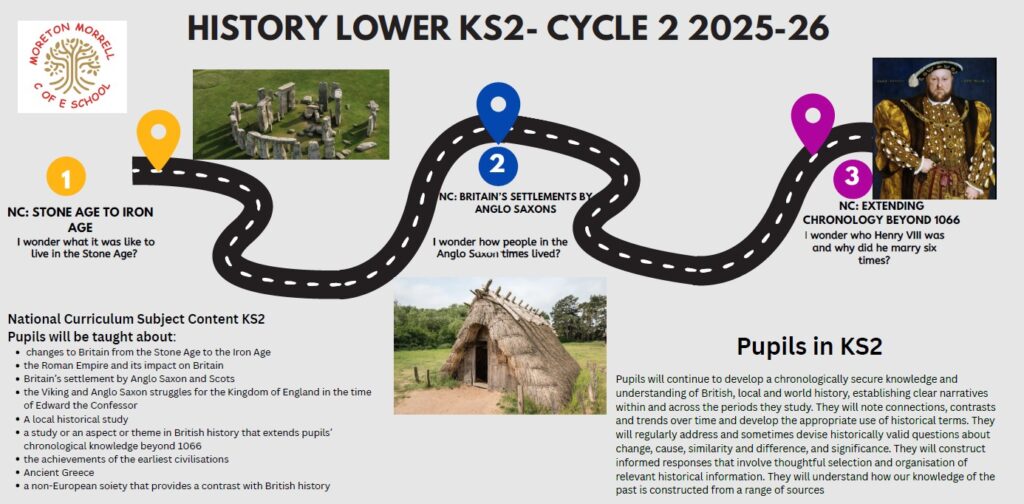
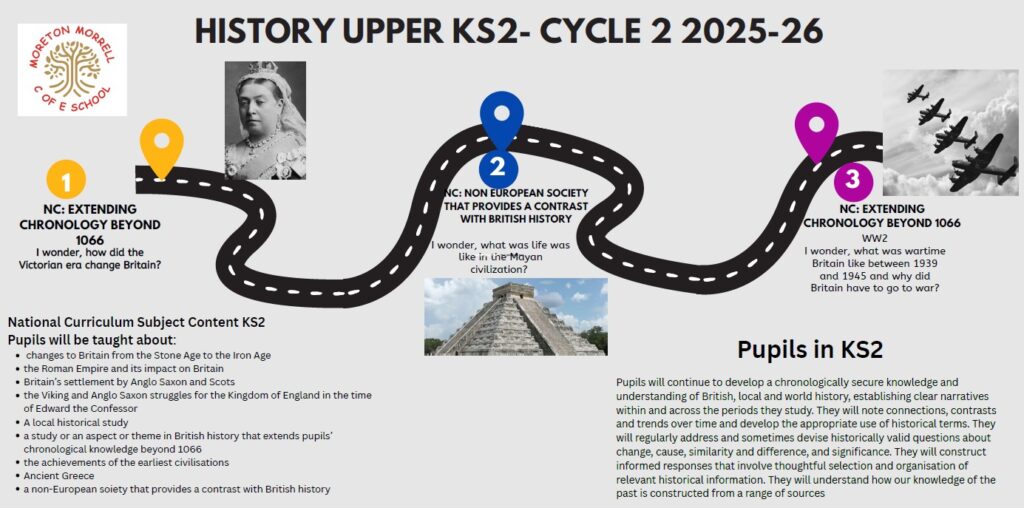
In KS1 and KS2, history is taught as a discrete subject in blocks in order to preserve the integrity of subject specific skills and knowledge. Teachers use planned sequences of lessons across each unit that build on and develop the children’s knowledge and skills.
In Key Stage 1, our curriculum enables children to develop an awareness of the past, using common words and phrases relating to the passing of time. They start to know where the people and events they study fit within a chronological framework and identify similarities and differences between ways of life in different periods. They make comparisons and connections between people and events in the past.
In Key Stage 2, children continue to develop a chronologically secure knowledge and understanding of British, local and world history, establishing clear narratives within and across the periods they study. This chronology is referred to throughout KS2 so that children become secure in their understanding of important historical events and eras. It also enables them to identify trends over time and develop the appropriate use of historical terms such as ancient and civilisation. The explicit mapping and rigorous teaching of vocabulary ensures that children can gain and deploy a historically grounded understanding of abstract terms such as ‘empire’ or ‘legacy’.
Opportunities to practise and embed skills are planned for so that they are revisited and refined over time. The knowledge and skills that children will develop throughout each history topic are mapped across each year group and across the school to ensure progression. We also maximise the opportunities that our local area of Stratford has to offer in terms of its rich history and vast array of museums and cultural sites. Therefore, children’s learning in history is enriched by visits to carefully selected museums and art galleries, where workshops and visit materials deepen the pupil’s understanding and knowledge.
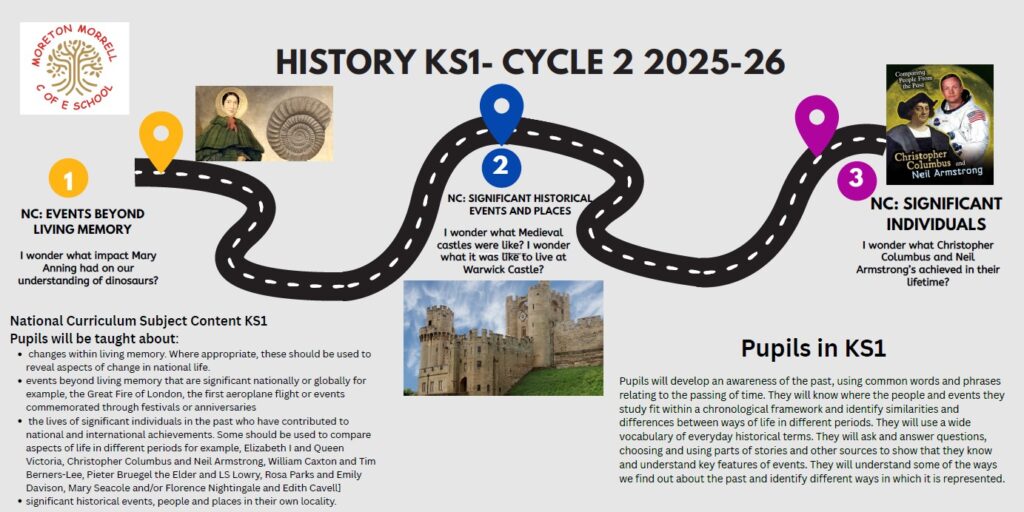
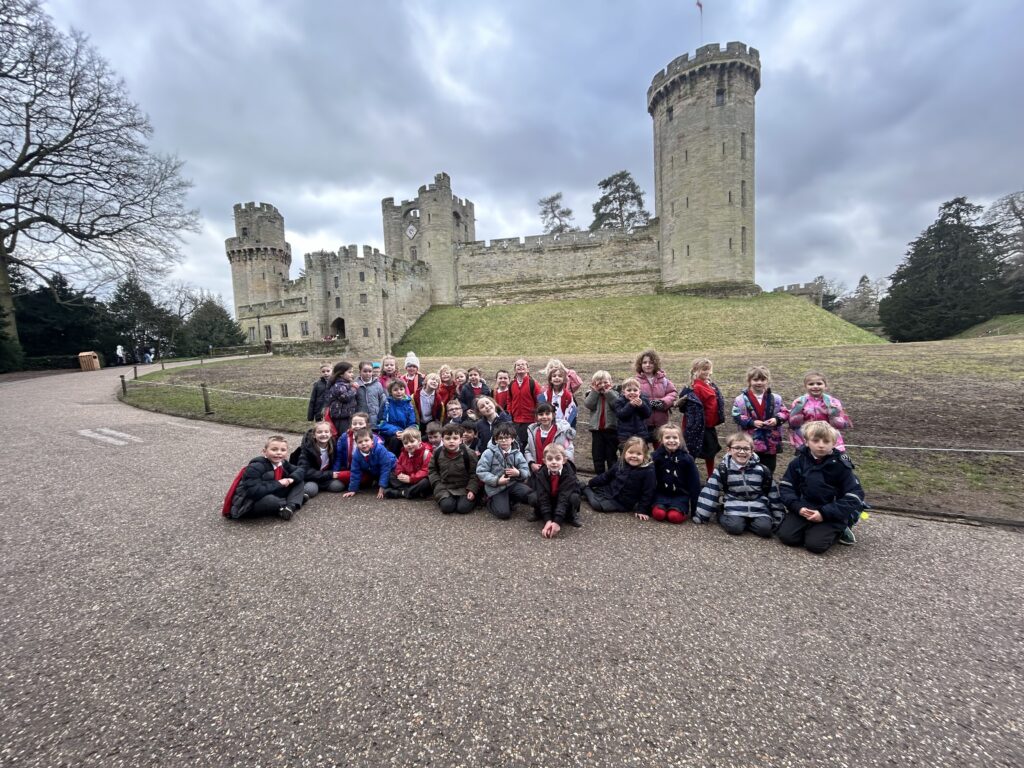
Key Stage 1 pupils on a trip to Warwick Castle. Understanding significant historical places within their own locality.
